Foam-Backed Hotspot Caddis
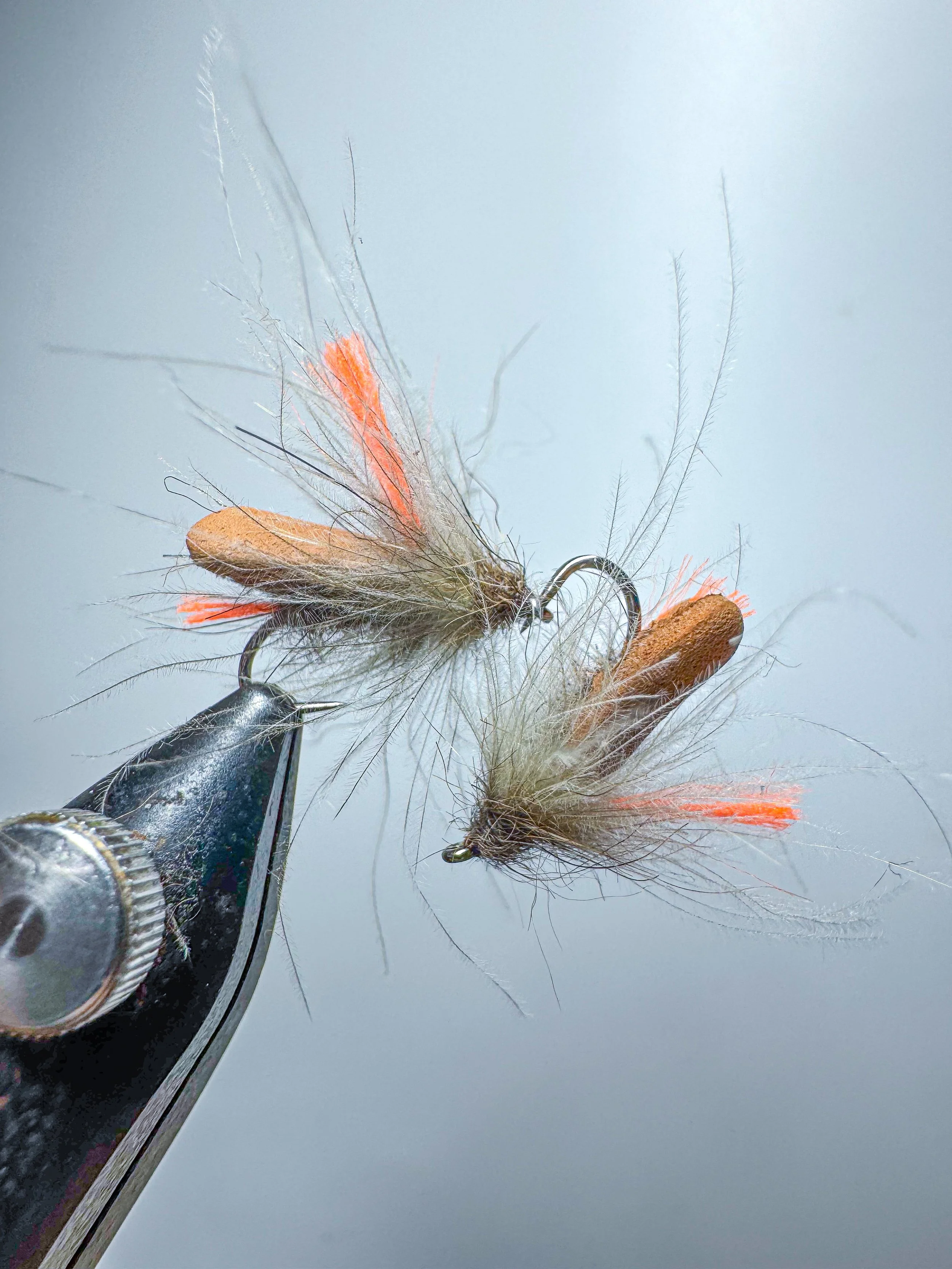
A high-floating caddis for fast water & broken runs
Why it works
This pattern is a high-floating, ultra-visible caddis style that excels in broken water, pocket water, and faster runs. The foam back keeps it riding high, while the soft hackle and wing give movement and a natural silhouette. The orange hotspot tail adds just enough trigger without overpowering the fly.
It’s a confidence dry — especially when trout are looking up but conditions aren’t perfect.
When I fish it
Water: Pocket water, riffles, fast seams
Rig: Dry or dry-dropper
Best conditions: Breezy days, broken light, rising fish
Materials
Hook : Dry fly hook #12–16
Thread: Grey or white 8/0 Nano Silk
Tail: Fluoro orange hends Tag Thread
Back: Tan closed-cell foam
Wing: CDC Natural Dun
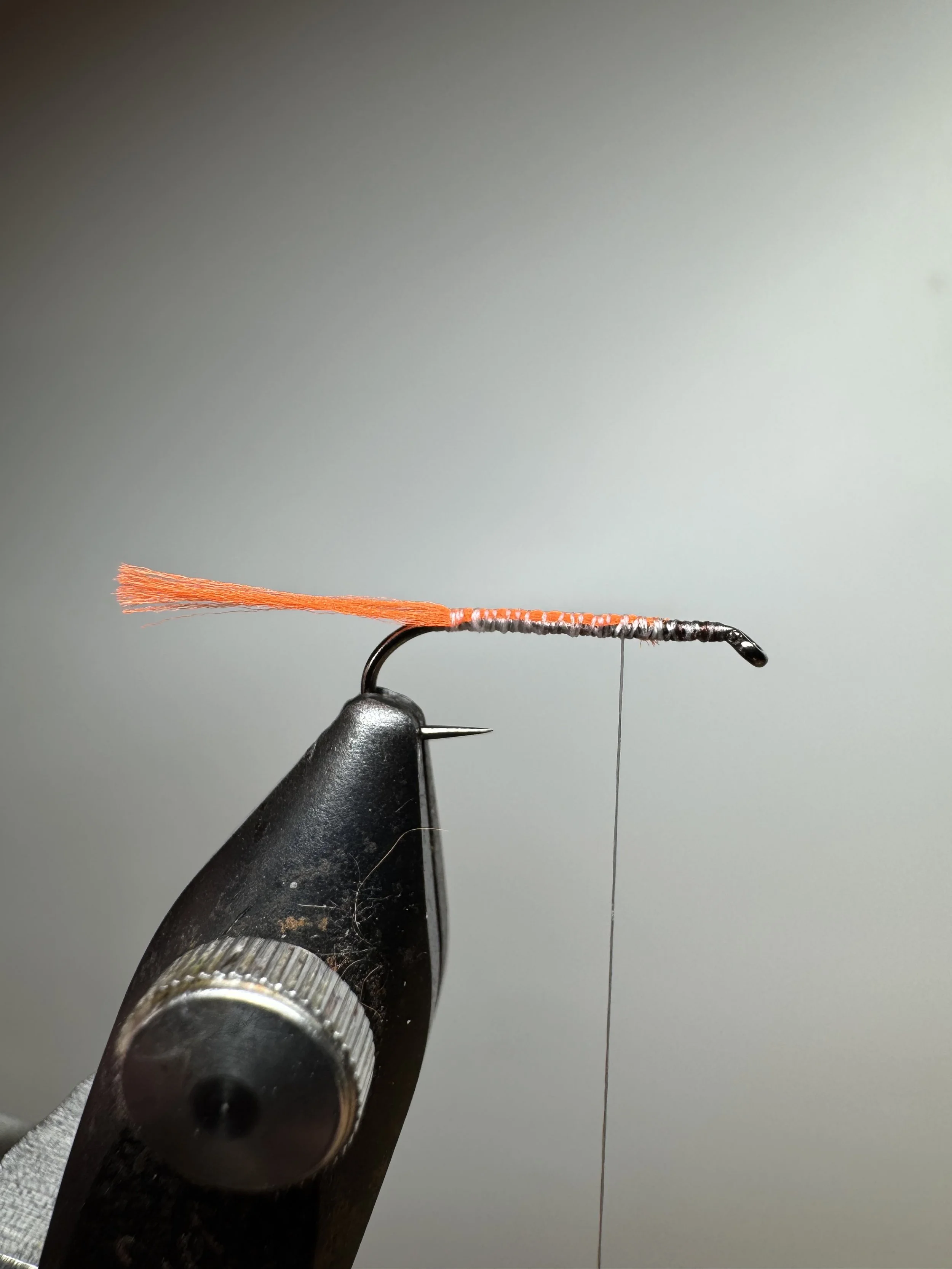
Step 1 – Thread base & tail
Start your thread behind the eye and lay a smooth thread base back to the bend. Tie in a small bunch of orange antron, glow bright for the tail, keeping it slim and about the length of the hook shank.
Tip: Less tail is more — you’re creating a trigger, not a streamer.
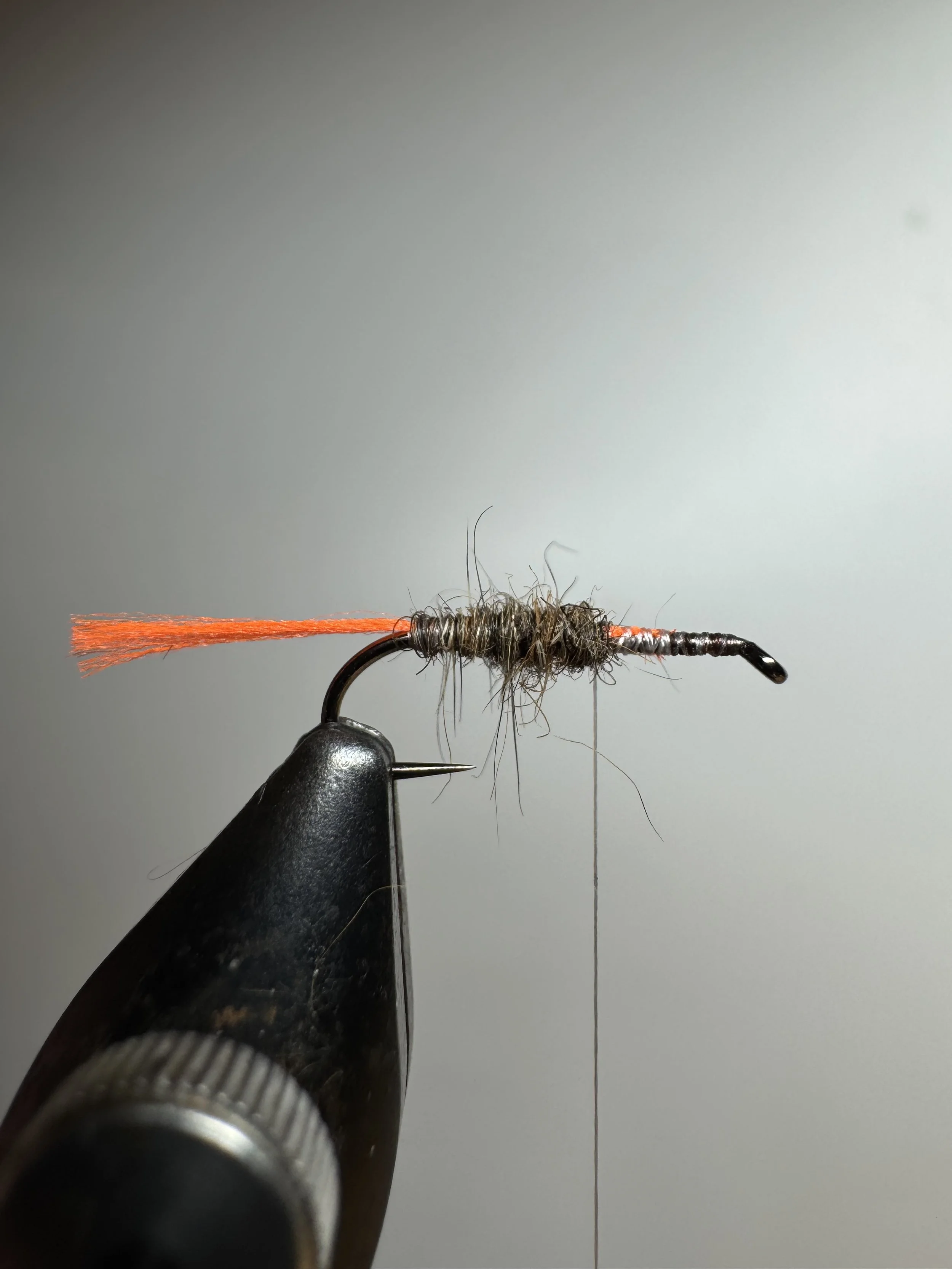
Step 2 – Build the underbody
Dub a thin, tapered body forward, stopping around two eye-lengths behind the eye. This gives the fly shape while keeping it light.
Why: A slim underbody helps the foam sit cleanly and keeps the fly balanced.
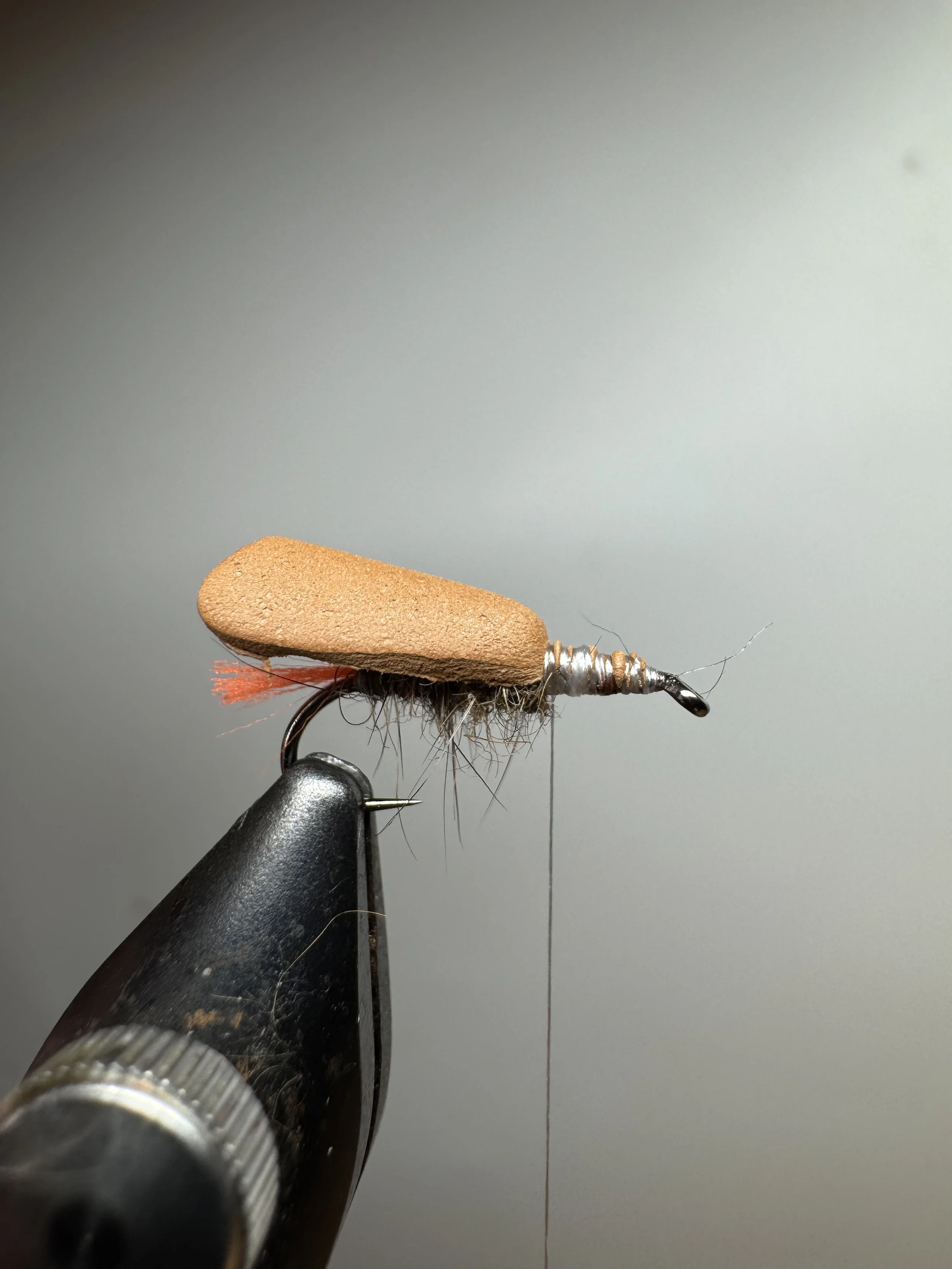
Step 3 – Add the foam back
Tie in a strip of tan foam on top of the shank, securing it firmly at the thorax area. Don’t pull it forward yet — just anchor it.
Tip: Keep the foam centered. Any twist here shows in the finished fly.
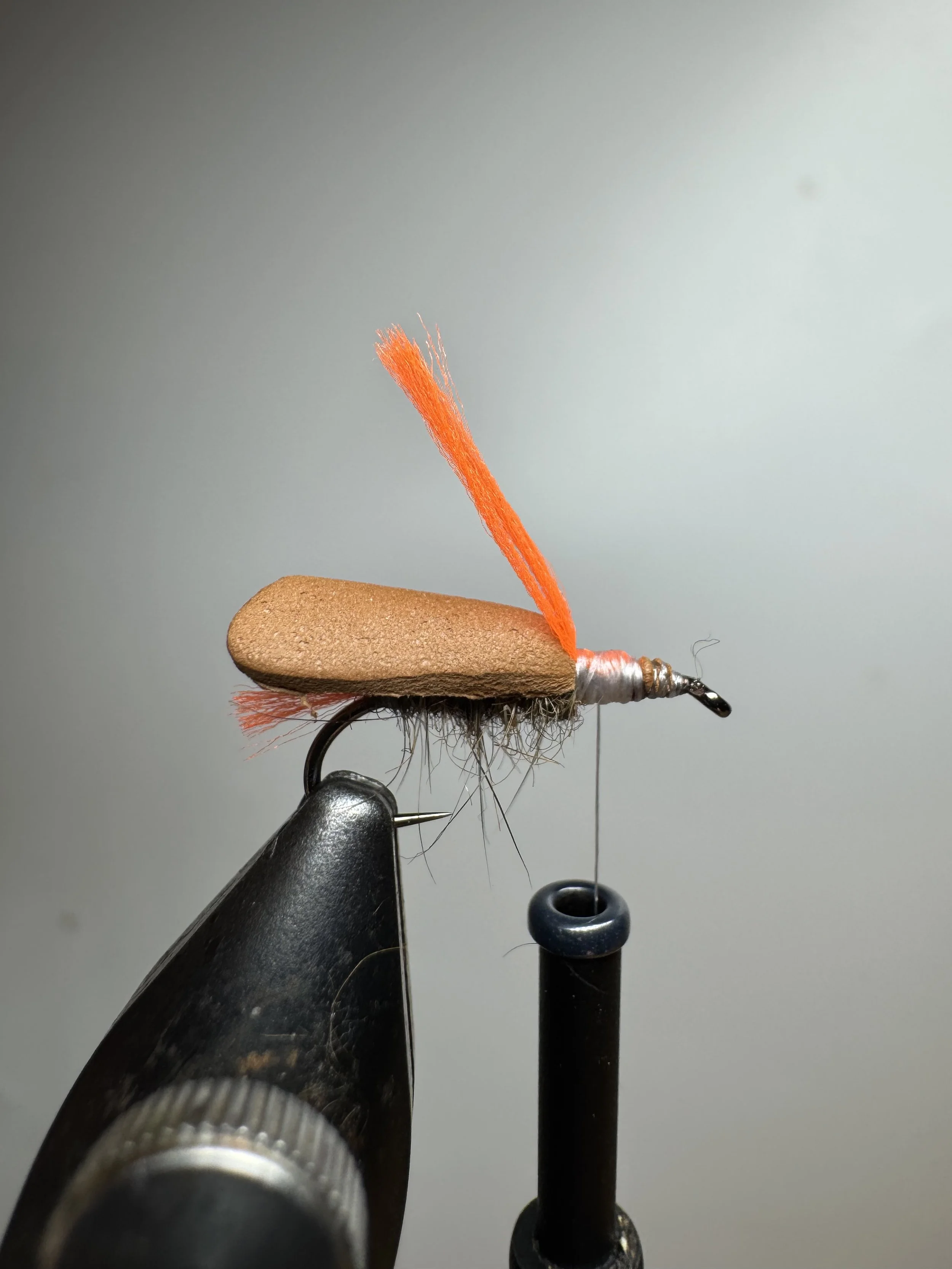
Step 4 – Post the hotspot
Tie in a short upright post of orange antron just behind the eye. This acts as both a visual aid and a strike trigger.
Why: This makes the fly incredibly easy to track in broken or glare-heavy water.
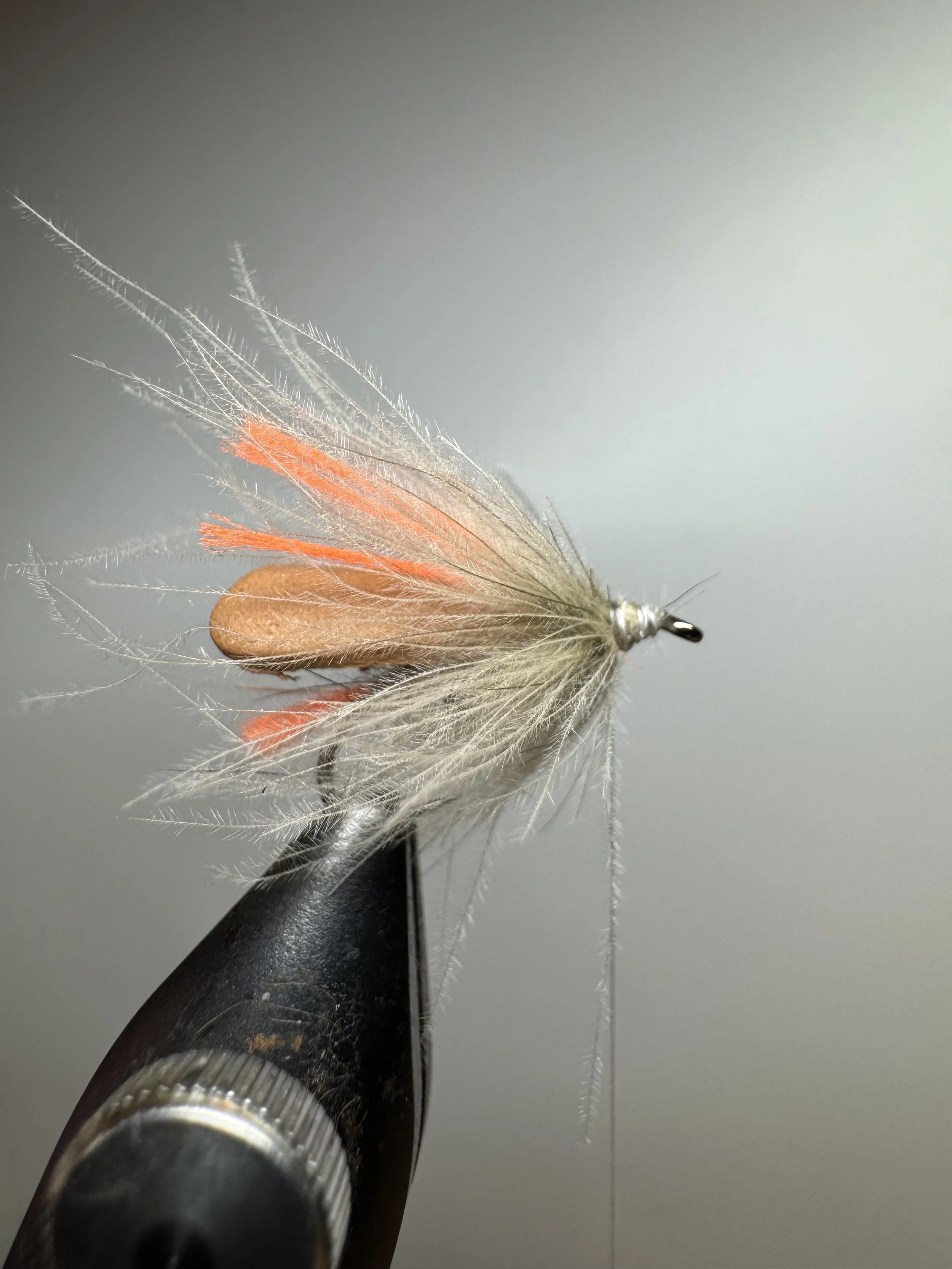
Step 5 – Wing / hackle
Tie in a soft CDC feather or similar material, sweeping it back to form a low-profile wing. Keep it sparse — movement comes from softness, not bulk.
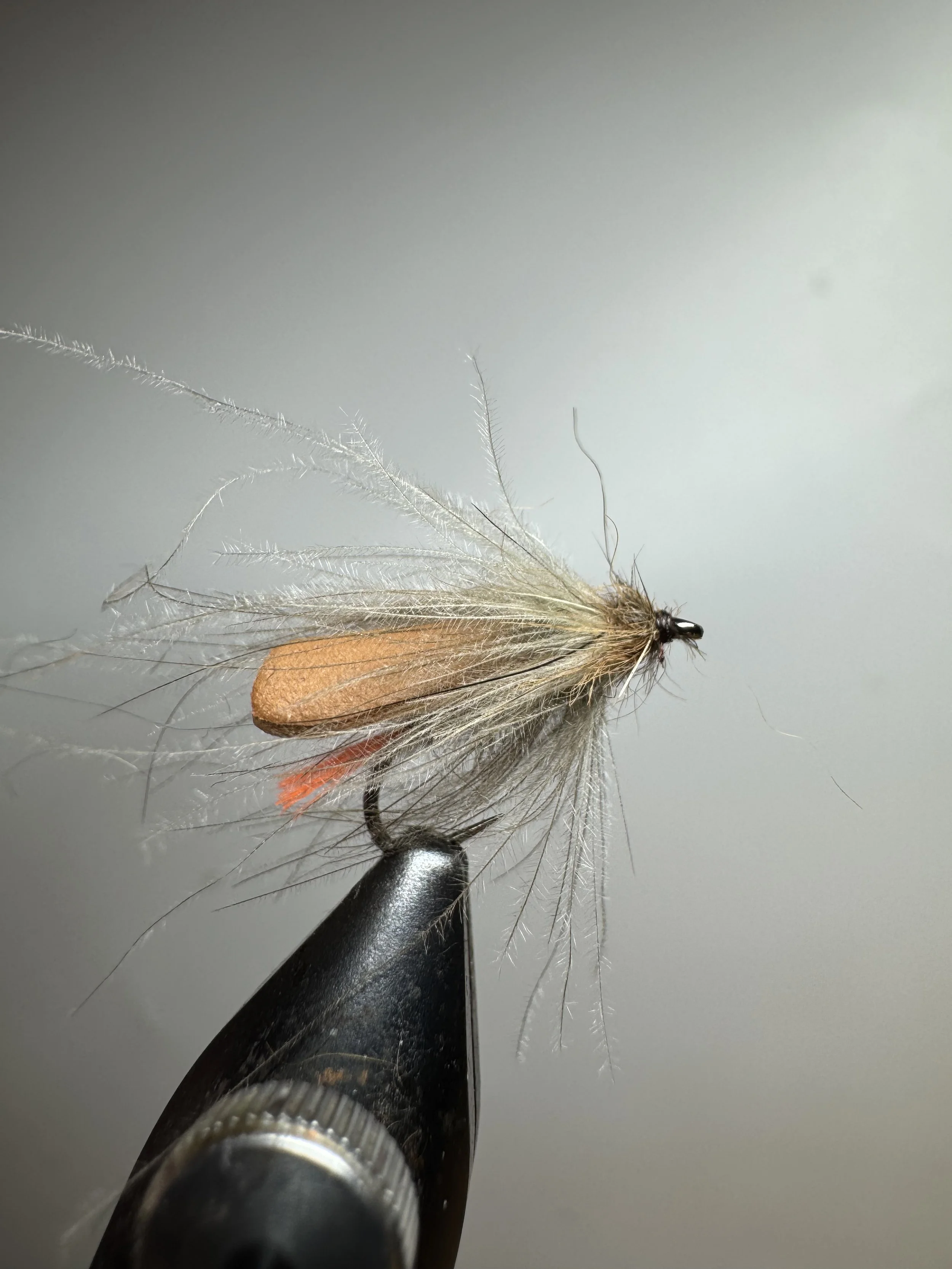
Step 7 – Hare’s ear head & whip finish
Dub a small, neat head using hare’s ear dubbing. Build a clean thread dam behind the eye, whip finish, and trim the thread.
Optional: Add a tiny drop of head cement for durability.